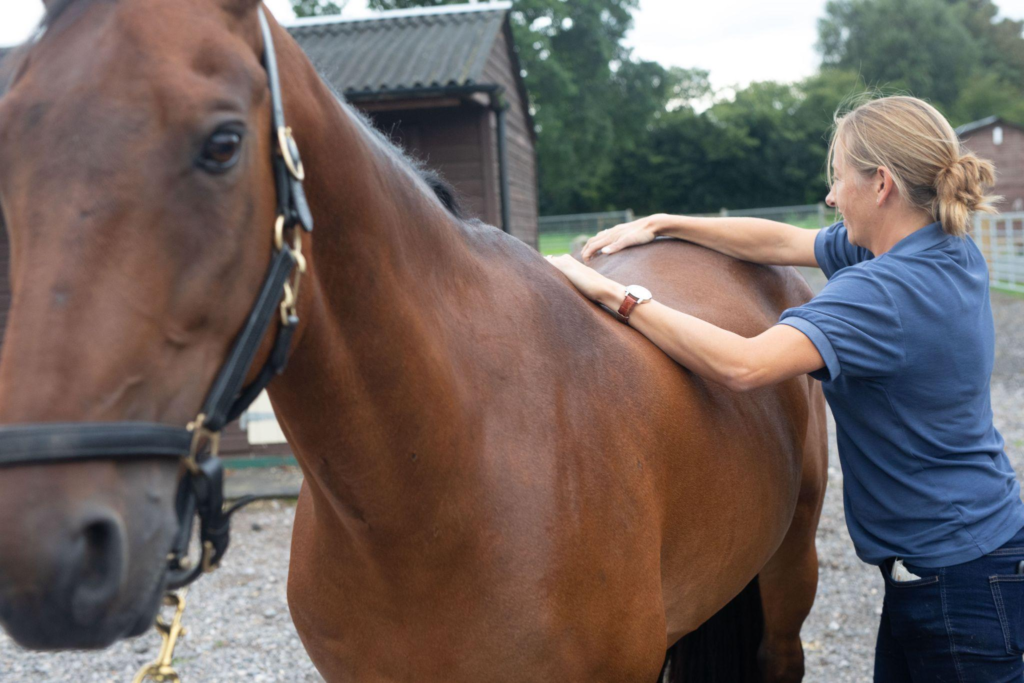
Performance changes are often subtle at first. A horse may feel less forward, struggle with engagement, resist certain movements, lose impulsion, become inconsistent in contact, or tire more quickly than usual. Transitions may feel flat, jumping effort may decrease, or the horse may seem unwilling to sit behind. These changes are sometimes attributed to training variation, rider influence, or attitude. However, medical factors are frequently involved. Performance optimisation in horses begins not by asking the horse to work harder, but by investigating whether underlying discomfort or physiological limitation is present.
Horses rarely stop performing without reason. They are naturally athletic and conditioned to tolerate a degree of physical demand. When performance declines, there is often an identifiable cause — even if it is not immediately obvious. The challenge lies in recognising subtle signs before they progress into overt lameness or significant disease.
Low-grade lameness is one of the most common contributors to reduced athletic output. A horse may not appear visibly lame on casual observation, yet mild joint inflammation, early osteoarthritis, foot imbalance, or soft tissue strain can significantly impair balance, power, and willingness. Subtle asymmetry may only be apparent on circles, during transitions, or under saddle. A structured lameness evaluation includes detailed history-taking, gait assessment on multiple surfaces, flexion tests, and, where appropriate, diagnostic analgesia to localise pain. Imaging such as radiography or ultrasonography may then confirm pathology. Identifying these issues early allows targeted treatment before degeneration progresses.
Back and sacroiliac discomfort are also frequent but often under-recognised contributors to poor performance. Horses with axial skeletal pain may resist engagement, struggle with collection, or show behavioural tension. Careful palpation, dynamic assessment, and, where indicated, imaging help differentiate primary limb pathology from compensatory back pain.
Respiratory function plays a major role in stamina and recovery. Conditions such as equine asthma, inflammatory airway disease, or dynamic upper airway obstruction can limit oxygen exchange and impair exercise tolerance. A horse may show increased respiratory effort, delayed recovery, coughing during warm-up, or subtle noise during exercise. Endoscopic examination allows direct visualisation of the upper airway, while further diagnostics may assess lower airway inflammation. Appropriate management — including environmental modification, medication, and conditioning adjustments — often leads to measurable improvement.
Gastric ulcer disease is another frequent but hidden cause of reduced performance. Horses in regular training are at increased risk due to intermittent feeding, stress, and high-energy diets. Clinical signs may include girthiness, reluctance to go forward, irritability, inconsistent contact, weight fluctuation, or mild colic episodes. Gastroscopy remains the definitive diagnostic method, allowing direct visualisation of the stomach lining. Targeted treatment and dietary modification can significantly improve comfort and willingness to work.
Metabolic and muscular factors should not be overlooked when considering performance optimisation in horses. Blood testing may reveal elevated muscle enzymes, suggesting ongoing myopathy or inadequate recovery. Electrolyte imbalances may impair stamina and muscle contraction. Inflammatory markers can indicate systemic stress or low-grade infection. Endocrine disorders such as PPID or insulin dysregulation, particularly in older horses, may contribute to altered energy levels, muscle loss, or delayed recovery. Identifying and addressing these factors supports sustainable athletic performance.
Cardiovascular assessment, while less commonly implicated, is also important in certain cases. Arrhythmias or structural cardiac abnormalities may reduce stamina or cause inconsistent effort. Careful auscultation and, when indicated, further evaluation ensure these contributors are not overlooked.
Importantly, performance optimisation in horses requires a holistic perspective. Training intensity, footing consistency, saddle fit, dental comfort, and rider-horse interaction all influence output. Veterinary assessment works alongside these factors, ensuring that physical health is not the limiting variable. Sometimes small management adjustments — altered warm-up routines, physiotherapy, farriery modification, or tailored conditioning plans — produce significant improvement once discomfort is addressed.
The goal of veterinary evaluation is not to over-medicalise normal variation, but to methodically exclude potential contributors. By systematically assessing musculoskeletal, respiratory, gastrointestinal, metabolic, and cardiovascular systems, we create a comprehensive understanding of the horse’s health status. This structured approach replaces speculation with evidence.
Early identification of subtle issues prevents escalation into more serious injury. Low-grade joint inflammation, if ignored, may progress to advanced osteoarthritis. Mild airway inflammation can become chronic if unmanaged. Addressing discomfort promptly protects long-term soundness, preserves performance potential, and safeguards welfare.
Performance optimisation in horses is ultimately about comfort. A horse that feels physically well performs more willingly, more consistently, and with greater confidence. Rather than pushing through resistance, identifying and addressing the root cause creates sustainable improvement.
If your horse feels “not quite right,” even without obvious lameness, it is worth discussing. Subtle changes often provide the earliest opportunity for intervention. Through structured assessment and evidence-based diagnostics, we can help uncover hidden problems and support your horse in returning to their full athletic potential.